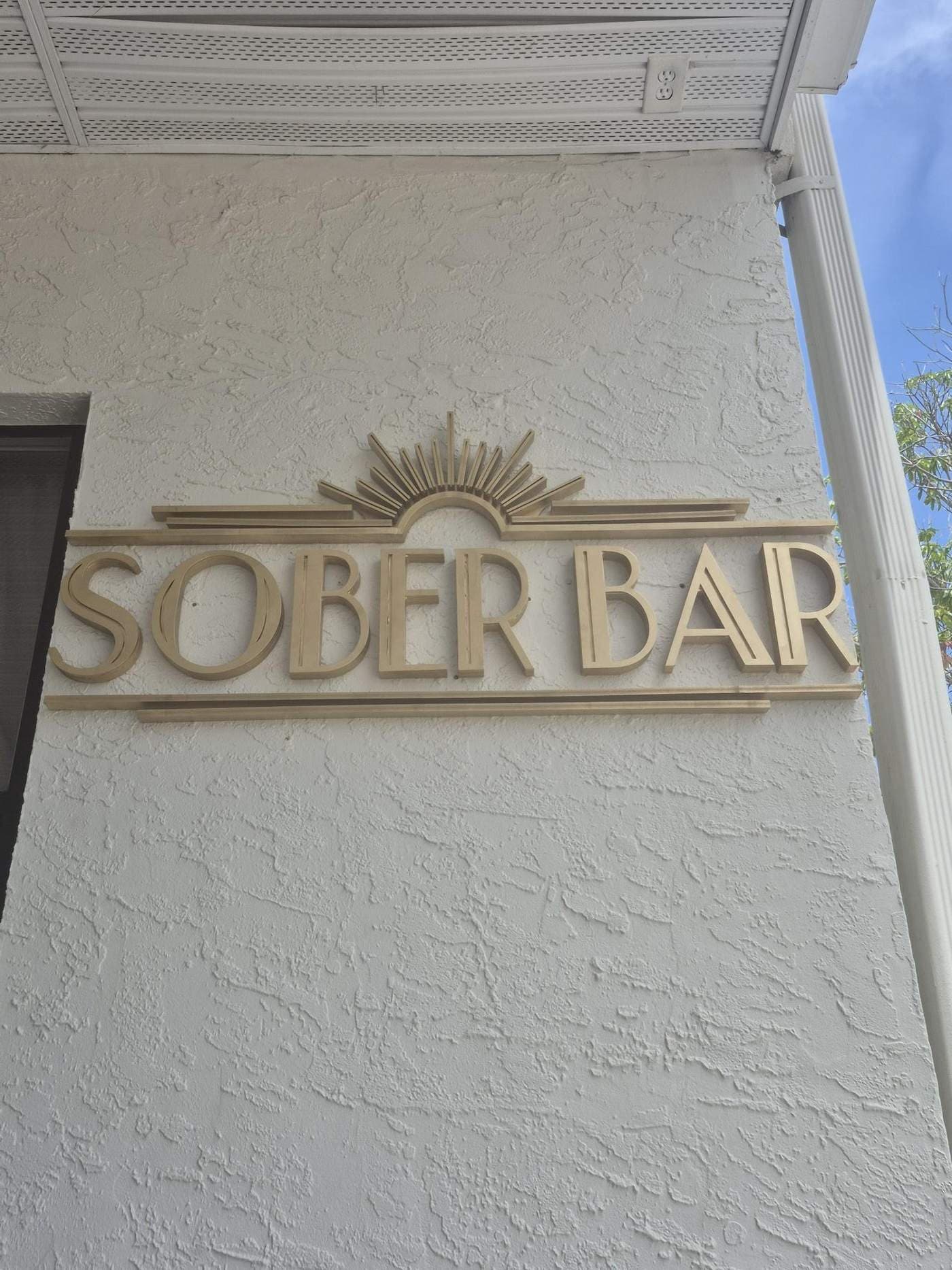
The best material for dimensional letters depends on three things: where the wall is, how much sun hits it, and how big the letters are. For most interior logo walls we cut cast acrylic. For a wall that bakes all afternoon, we stay with acrylic or move to high-density foam, and we keep expanded PVC indoors. Those are the four materials behind the dimensional letters we build in Tampa: acrylic, expanded PVC, HDU foam, and brushed aluminum composite.
Heat is why material choice matters more here than in most of the country. In July 2025, Tampa International Airport reached 100°F, an all-time record for that station in 86 years of records (Florida Climate Center, Climate Summary for Florida - July 2025, 2025). This guide covers what each material weighs, how it cuts, how hot it can run, and how it mounts.
Key Takeaways
- Cast acrylic is our default for interior logo walls and the safest plastic for a full-sun exterior.
- Expanded PVC is for interior or short-term exterior use; Laird Plastics lists its maximum service temperature at 140°F (Laird Plastics, SINTRA Expanded PVC Board, 2026).
- HDU foam weighs about one-fifth what acrylic does, which makes very large letters practical.
- Brushed ACM gives a solid-metal look at roughly half the weight of solid aluminum.
Which dimensional letter material fits which job?
Cast acrylic covers most jobs. It has a specific gravity of 1.19 (Plaskolite, OPTIX Acrylic, 2026), cuts clean on a router or laser, and holds up outdoors. Expanded PVC is the budget interior pick, HDU foam is the big-letter pick, and brushed ACM is the pick when a wall needs to read as metal.
Interior logo wall. Cast acrylic in 1/4" or 1/2" stock, painted to your brand color, for the crispest edge and truest color match. If the lobby wants a brushed-metal look, ACM does that at a weight drywall can carry.
Large budget letters. Expanded PVC or HDU foam. Both are light enough that a two-foot letter is a one-person lift. PVC is the cheaper cut; foam gives more depth.
Covered exterior storefront. Acrylic, HDU, or ACM under an awning or overhang. Shade keeps surface temperatures down, and all three are rated for outdoor use by their makers.
Full-sun exterior. Cast acrylic or HDU foam, the two materials with manufacturer service temperatures well above anything a Tampa wall will see. We don't put PVC on a bare, sun-struck wall.
| Material | Weight | Heat and sun tolerance | Best use | Watch out for |
|---|---|---|---|---|
| Cast acrylic | Specific gravity 1.19 (Plaskolite, 2026) | Continuous service to 180°F; colorless GP sheet carries a 10-year light-transmission warranty (Norva Plastics, 2026); "highly resistant to weather conditions" (ACRYLITE, 2026) | Interior logo walls, covered and full-sun exteriors | Thermal movement on long words; paint compatibility on laser-cut edges |
| Expanded PVC | About 0.55 g/cm³ (Laird Plastics, 2026) | Maximum service 140°F; interior or short-term exterior (Laird Plastics, 2026); 10mm+ gauges for exterior (3A Composites USA, 2026) | Large interior letters, budget walls, event walls | Full-sun walls, dark paint colors |
| HDU foam | 15 lb/ft³ (Laird Plastics, 2026) | Service to 200°F (Coastal Enterprises, 2026); impermeable by water (NEPCO Sign Supply, 2026); "will not crack, rot or peel" (Laird Plastics, 2026) | Big letters, thick letters, covered exteriors | Thin strokes and sharp serifs; must be primed and painted |
| Brushed ACM | Two .012" aluminum skins over a polyethylene core, about half the weight of solid aluminum (3A Composites USA, 2026) | "Excellent durability in outdoor applications" (3A Composites USA, 2026) | Lobby walls that need a metal read, covered exteriors | Core shows at the cut edge; thin-skin economy panels |
Acrylic letters: cast vs extruded, and why we cut from cast
We cut acrylic letters from cast sheet, not extruded. ACRYLITE's knowledge base says cast has "less tendency to melt or chip during machining," comes in custom colors, and offers a greater range of thicknesses (ACRYLITE, What is the difference between cast and extruded acrylic sheet?, 2026). Extruded is cheaper and cements faster, which suits flat panels more than letters.
Laser or CNC router?
Both, depending on thickness. In 2021, ACRYLITE's laser manual noted that a laser as small as 40 watts can cut sheet up to approximately 1/4" (ACRYLITE, Laser Machining, 2021). A laser leaves a polished edge. Above 1/4" we route and finish the edge by hand.
The catch with laser edges is paint. The same manual describes a highly stressed zone about 0.010" to 0.050" deep at a laser-cut edge that is very susceptible to crazing from incompatible solvents. Spray the wrong paint on a fresh laser edge and it spiderwebs, so we test on scrap from the same sheet first.
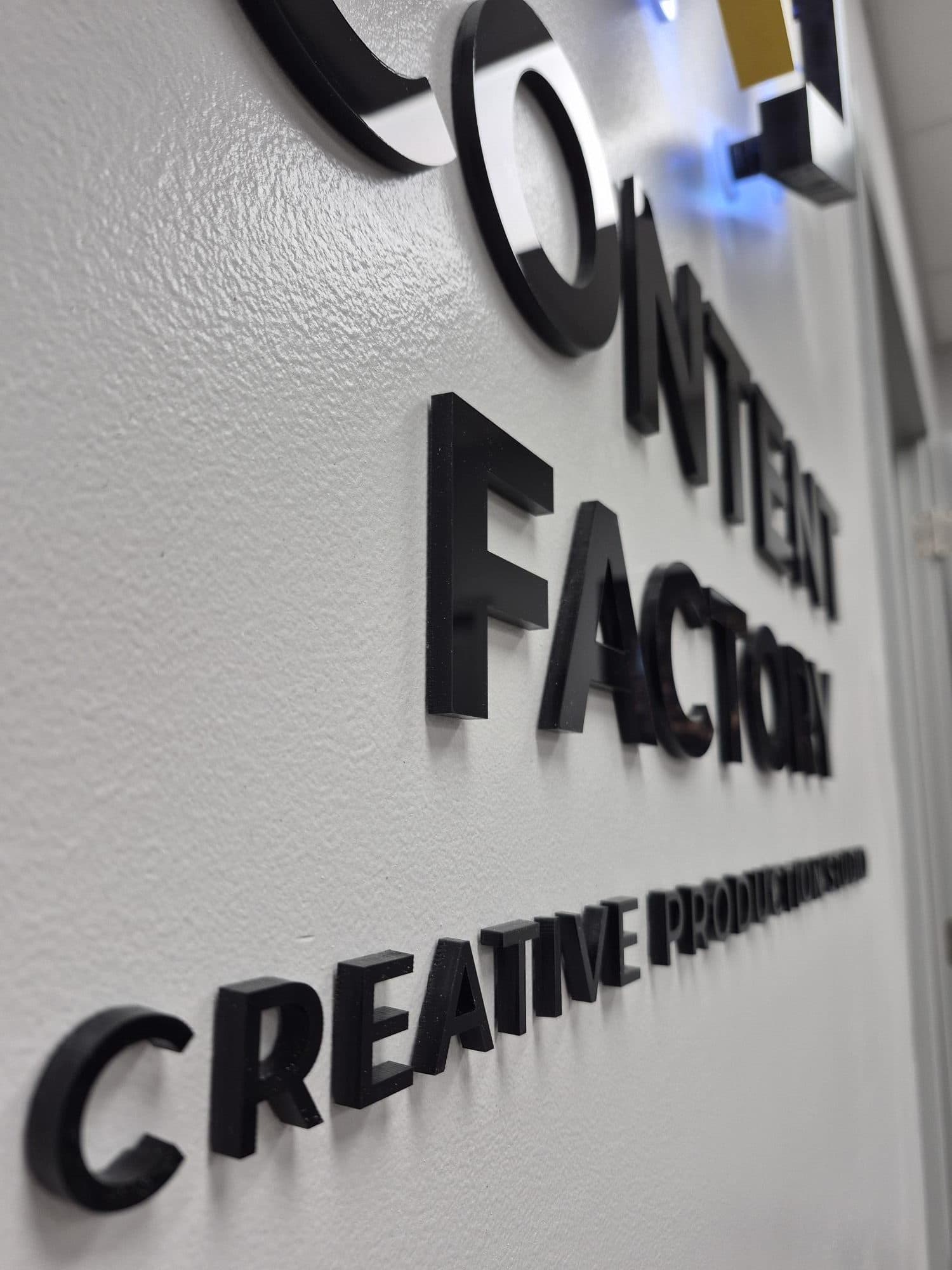
Thickness and thermal movement
Standard letter stock is 1/8", 1/4", and 1/2". Thin 1/8" suits small interior words or letters carried on a backer panel from our acrylic sign work. Quarter-inch is the everyday choice. Half-inch gives a real shadow line and is the stock we use for halo-lit LED letters, where depth hides the modules.
Acrylic moves with heat. ACRYLITE's 2021 sign-making manual says a 100°F temperature change moves its extruded sheet about 3/64" per foot (ACRYLITE, Creating Signs, 2021). We plan for cast the same way. On a 4-foot logo panel that is roughly 3/16" of movement, our math.
On multi-piece logos we cut for reception walls, the most common layout mistake we see from outside designers is butting pieces tight. We leave a visible gap between adjacent shapes and stud-mount each letter on its own, so every piece can move without pushing on its neighbor. A long one-piece rule line gets slotted holes, not tight ones.
Can PVC letters be used outdoors in Tampa?
For a season, not for years. Laird Plastics lists SINTRA's maximum service temperature at 140°F and describes the board as designed primarily for interior use and suitable for short-term outdoor (Laird Plastics, SINTRA Expanded PVC Board, 2026). For any exterior use, 3A Composites recommends gauges of 10mm and up (3A Composites USA, Sintra, 2026).
Expanded PVC is a foamed plastic. 3A Composites describes SINTRA as moderately expanded, closed-cell PVC in a homogenous sheet with a low-gloss satin finish, in gauges from 1mm to 12.7mm. It routes fast, takes paint well, and costs less machine time than acrylic.
Weight is its best feature. Laird lists the density at about 0.55 to 0.75 g/cm³, and acrylic sits at 1.19, so at equal thickness expanded PVC is roughly half the weight of acrylic, our math. ePlastics lists a 1/2" x 48" x 96" sheet at 44 lb (ePlastics, 1/2" X 48" X 96" White Sintra Celtec PVC Foam Sheet, 2026). That's why we reach for it on large interior letters and budget lobby walls.
Now the Tampa part. In 2026, the National Weather Service put Tampa's normal August average high at 91.2°F, with a normal 22.4 days at or above 90°F (NOAA National Weather Service Tampa Bay, Monthly Climate Summary for Tampa (August 2026), 2026). Air temperature is only the start, because a painted surface in direct sun runs hotter than the air around it.
From the shop floor: A dark-painted PVC letter on a west-facing stucco wall sits well above the air temperature by mid-afternoon. We've taken down PVC sets that bowed and lifted at the edges after a summer or two in full sun. Under a covered entry the same letters hold fine.
What is HDU foam, and where does it shine?
HDU is high-density urethane, a closed-cell rigid foam made for sign work. Coastal Enterprises makes Precision Board in sixteen standard densities and rates its PBLT line for service temperatures up to 200°F (Coastal Enterprises, Manufacturers of Precision Board, 2026). We cut the 15-pound grade for letters, and it weighs about a fifth of acrylic.
The durability claims come from the makers, not from us. Laird lists PBLT-15 at 15 lb/ft³ for indoor and outdoor signage, says it "will not crack, rot or peel," and stocks it in 1" and 2" thicknesses (Laird Plastics, High Density Foam Board | HDU Sheets, 2026). Sign-Foam 4 comes in 15 and 18 lb densities, is impermeable by water and moisture, and is rated from -30°F to 220°F (NEPCO Sign Supply, SignFoam 4 - HDU (48" x 120" x 2") 15 lb., 2026).
The weight math is simple. Acrylic at 1.19 specific gravity is about 74 lb per cubic foot, so 15-lb HDU is roughly one-fifth the density, our math. One installer can hold a 2"-thick, 30"-tall foam letter against the wall with one hand.
Foam needs finishing. Off the router, HDU has a fine open texture that looks like exactly what it is, so we prime every letter and then paint it. That's shop practice, not a spec-sheet line, and it's the step cheap foam signs skip. Primed and painted, a foam letter reads like painted acrylic from a few feet away.
Where it falls short is fine detail. Thin strokes and sharp serifs in 2" foam snap in handling, and paint build softens hairline corners. A heavy sans-serif at 24" and up is where HDU shines: big letters, covered exteriors, and walls near the bay where salt air is a factor.
Brushed ACM letters: the metal look without welding
Our most-requested lobby material is brushed aluminum composite, not solid metal. DIBOND is two pre-painted sheets of .012" aluminum bonded to a fire-rated polyethylene core, at approximately one half the weight of a solid aluminum sheet (3A Composites USA, Dibond, 2026). From a foot away, a brushed ACM letter reads as brushed metal.
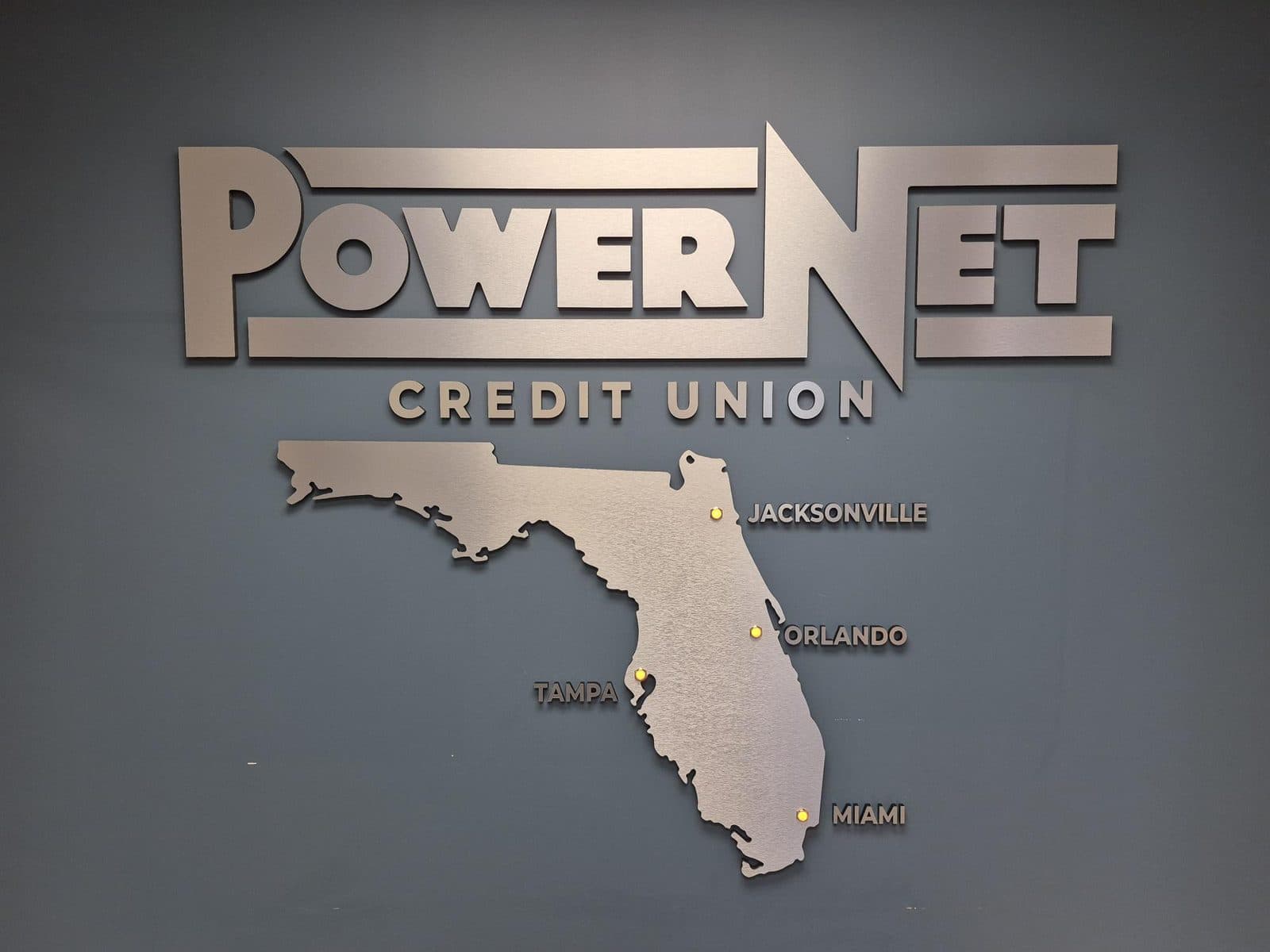
Weight is why it works on drywall. Maxmetal lists its 3mm panel at 3.55 kg/m², about 0.73 lb per square foot by our math, in brushed silver and brushed gold (Maxmetal, Maxmetal 3mm Aluminum Composite Panels, 2026). 3A rates DIBOND for excellent durability outdoors and offers brushed and mirror finishes. A 4-foot brushed logo weighs a few pounds, not forty.
The edge is the tell. After CNC cutting, the polyethylene core shows as a thin dark line between two bright skins. On the lobby walls we install, we either paint the edges or design the letter with a returned look, layering a slightly smaller piece behind it so the eye reads depth instead of a seam. That's the difference between the brushed credit union wall in our portfolio and a sign that looks like a cut panel.
Not all ACM is equal. E&T Plastics lists an economy panel with a metal thickness of .010" (E&T Plastics, Aluminum Composite Panel, 2026), thinner than DIBOND's .012" skins. In our experience the thinner skin dents easier and the brushed grain reads flatter under lobby lighting, so we spec the heavier skin for anything a customer will stand next to.
One honest limit. ACM is a panel, not billet. A job that needs welded returns, solid aluminum or stainless letters, or lit channel letters is a job for a different kind of shop, because we don't weld. We'll say so on the first call rather than sell you a lookalike.
How do mounting methods change by material?
Weight decides the mount. Gemini's 2026 product guide defines studs as threaded rods installed into the back of the sign and set into pre-drilled holes, best for solid surfaces like drywall and concrete (Gemini Product Guide, Mounting Hardware: The Foundation Behind Every Sign, 2026). Heavy acrylic gets studs. Light foam and PVC have more options.
The same guide covers the other two methods we use. Pad mounts are plastic pads with threaded thru holes that give a stable, level mounting point on irregular surfaces. Standoffs and spacers create separation between the sign and the wall for a floating look, the hardware behind halo-lit letters and the panel-carried logos on the lobby and reception signs we build.
Gemini's hardware page lists stud sizes of 4-40, 6-32, 10-24, and 1/4-20, and decorative standoffs in 1/2" and 1" diameters with 3/4" or 1 1/2" projection heights (Gemini Product Guide, Mounting Hardware Options, 2026). Thicker letters take a larger stud. Thinner ones take more studs, spaced closer.
| Material | Typical letter stock | Usual mount | What changes |
|---|---|---|---|
| Cast acrylic | 1/4" to 1/2" | Studs bonded into drilled backs; pads for a shadow line | Heaviest per letter; block walls need masonry anchors |
| Expanded PVC | 1/2" (12.7mm) | Studs, or adhesive on smooth interior walls | Soft core, so more studs per letter |
| HDU foam | 1" to 2" | Studs set deep with epoxy; adhesive and pins indoors | Very light; the deep body gives a stud plenty of bite |
| Brushed ACM | 3mm, often layered | Studs bonded to the back; standoffs through the face for panels | Too thin to drill; hardware bonds to the skin |
Wall type matters as much as material. Drywall takes a pattern and anchors quickly. Concrete block needs a hammer drill and masonry anchors, which adds install time and is one of the line items in our guide to what drives lobby sign cost. Stucco needs the substrate behind it found first, and every penetration sealed, or water gets in.
Choosing a material: a short decision list
Raw sheet price is not what you're paying for. At retail list, a 1/4" cast acrylic sheet is $163.20 (Estreet Plastics, 1/4" x 48" x 96" Clear Acrylic Plexiglass Cast Sheets, 2026) and 3mm DIBOND runs $160 to $295 by finish (Set Shop NYC, Aluminum Panel / Dibond, 2026). Machine time, paint, finishing, and hardware drive the letter cost.
Run through these five questions and the material usually picks itself.
- Where is the wall? Interior: any of the four. Covered exterior: acrylic, HDU, or ACM. Bare exterior: acrylic or HDU.
- How much sun? A west- or south-facing wall with no overhang rules out PVC and pushes lighter paint colors.
- How big are the letters? Under 12", acrylic. Over 24", foam or PVC start to make sense on weight and cost.
- What finish does the brand need? Exact gloss color: painted acrylic. Brushed metal: ACM. Deep painted letters: HDU.
- What's the budget? PVC is the least machine time, acrylic and ACM sit in the middle, and thick HDU with full finishing is the most labor.
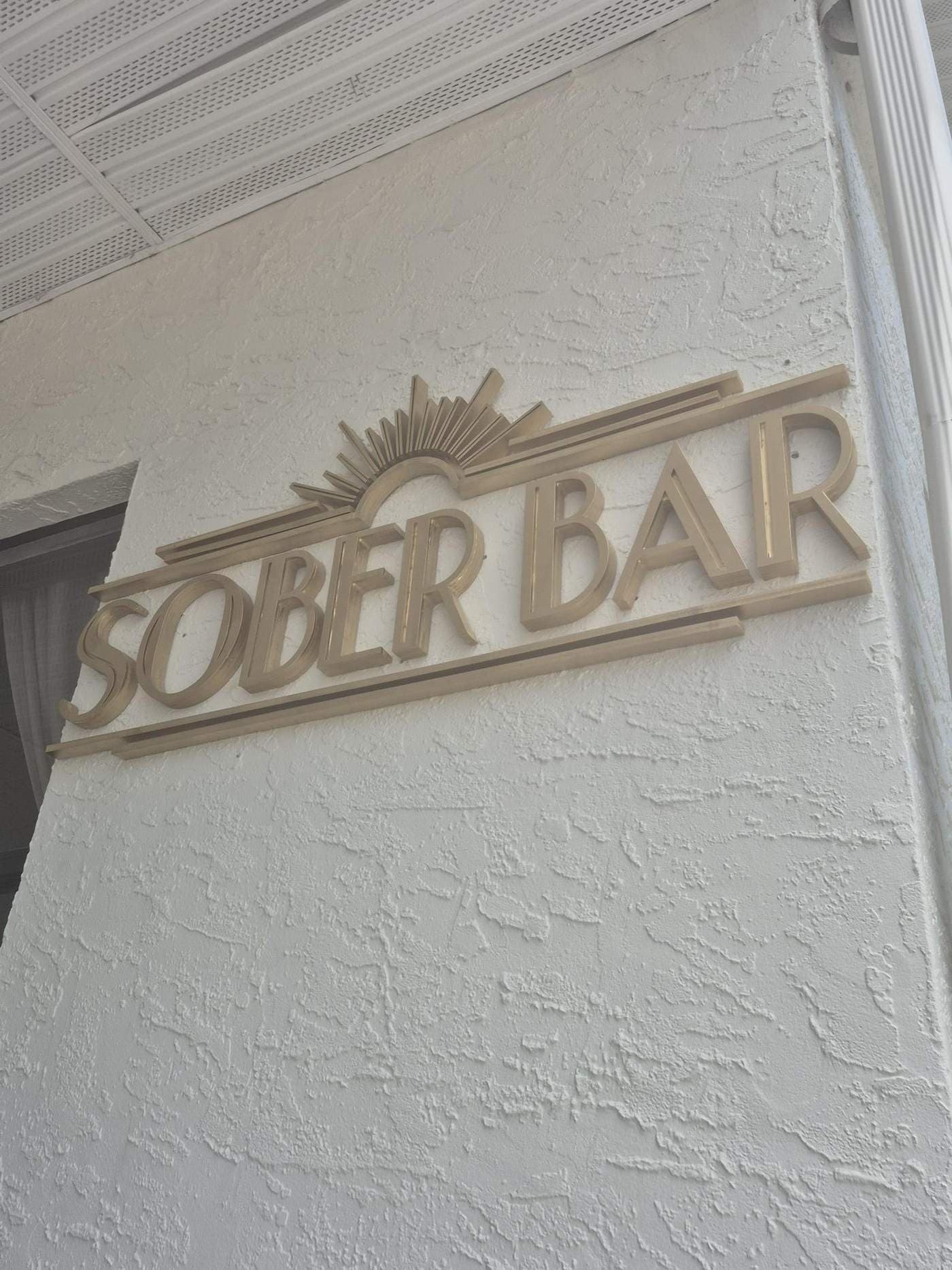
If you're unsure, send us the wall and we'll pick. Our dimensional letter service page covers finishes and mounting, and our post on preparing your logo file explains why vector artwork saves a redraw.
Frequently Asked Questions
What is the best material for dimensional letters?
Cast acrylic, for most jobs. It cuts clean, takes exact brand colors, and ACRYLITE rates its cast general-grade sheet as highly resistant to weather conditions (ACRYLITE, Cast general grade, 2026). Choose HDU foam for very large letters, expanded PVC for budget interior work, and brushed ACM when the wall needs to read as metal.
Can PVC letters be used outdoors?
Short-term only. Laird Plastics lists SINTRA's maximum service temperature at 140°F and calls it suitable for short-term outdoor use (Laird Plastics, SINTRA Expanded PVC Board, 2026), and 3A Composites recommends 10mm and thicker gauges for exterior work. Under a covered entry, 1/2" PVC holds up reasonably. On a full-sun Tampa wall, we quote acrylic or HDU foam instead.
What is HDU sign foam?
High-density urethane is a closed-cell rigid foam made for signs. Precision Board comes in sixteen standard densities, and its PBLT line is rated for service temperatures up to 200°F (Coastal Enterprises, Manufacturers of Precision Board, 2026). We cut letters from 15 lb/ft³ stock in 1" and 2" thicknesses, then prime and paint every piece before it leaves the shop.
How thick should dimensional letters be?
For acrylic, 1/4" is the everyday interior thickness and 1/2" gives a real shadow line. For PVC, use 1/2" (12.7mm), which clears the 10mm minimum 3A Composites recommends for exterior use (3A Composites USA, Sintra, 2026). HDU letters start at 1" and look best at 2". ACM is 3mm, so it's often layered for depth.
How long do acrylic letters last outside?
Longer than the paint on most walls. ACRYLITE's 2021 sign manual says acrylic will withstand intense sun, extreme heat and cold, and salt spray, and will not deteriorate after many years of service (ACRYLITE, Creating Signs, 2021). Colorless ACRYLITE GP carries a 10-year light-transmission warranty (Norva Plastics, Acrylite GP, 2026). Painted faces are the part that eventually needs attention.
What to send us for a quote
Three things: your logo, ideally as a vector file, a phone photo of the wall or storefront, and rough letter or overall dimensions. Tell us whether the wall gets direct sun and for how long. From that we can recommend a material, a thickness, and a mount, and flag anything that won't hold up.
Pricing is quoted per project, because letter count, size, material, finish, and wall type all move the number. Request a quote and we'll come back with material options and honest tradeoffs for your exact set, including when the cheaper material is the better call.
Sources
- Florida Climate Center (FSU), Climate Summary for Florida - July 2025, retrieved 2026-09-30, https://climatecenter.fsu.edu/?catid=115&id=669&view=article
- NOAA National Weather Service Tampa Bay, Monthly Climate Summary for Tampa (August 2026), retrieved 2026-09-30, https://forecast.weather.gov/product.php?site=GGW&product=CLM&issuedby=TPA
- Plaskolite, OPTIX Acrylic, retrieved 2026-09-30, https://plaskolite.com/catalog/optix-acrylic
- Norva Plastics, Acrylite GP, retrieved 2026-09-30, https://norvaplastics.com/acrylics/acrylite-gp/
- ACRYLITE, Cast general grade, retrieved 2026-09-30, https://www.acrylite.co/products/brands/cast/general-grade
- ACRYLITE, What is the difference between cast and extruded acrylic sheet?, retrieved 2026-09-30, https://www.acrylite.co/resources/knowledge-base/article/what-is-the-difference-between-cast-and-extruded-acrylic-sheet?category=product-properties
- ACRYLITE, Laser Machining, retrieved 2026-09-30, https://www.acrylite.co/resources/fabrication-manuals/laser-machining-acrylite
- ACRYLITE, Creating Signs, retrieved 2026-09-30, https://www.acrylite.co/resources/fabrication-manuals/create-signs-with-acrylite-premium-acrylic-sheet
- 3A Composites USA, Sintra, retrieved 2026-09-30, https://3acompositesusa.com/products/sintra/
- Laird Plastics, SINTRA Expanded PVC Board, retrieved 2026-09-30, https://lairdplastics.com/all-products/white-pvc-sintra/
- ePlastics, 1/2" X 48" X 96" White Sintra Celtec PVC Foam Sheet, retrieved 2026-09-30, https://www.eplastics.com/PVCWHT0-500FOAM48X96
- Coastal Enterprises, Manufacturers of Precision Board, retrieved 2026-09-30, https://precisionboard.com/
- Laird Plastics, High Density Foam Board | HDU Sheets, retrieved 2026-09-30, https://lairdplastics.com/all-products/high-density-foam-board-hdu/
- NEPCO Sign Supply, SignFoam 4 - HDU (48" x 120" x 2") 15 lb., retrieved 2026-09-30, https://www.nepcosignsupply.com/store/pc/viewPrd.asp?idproduct=14317
- 3A Composites USA, Dibond, retrieved 2026-09-30, https://3acompositesusa.com/products/dibond/
- Maxmetal, Maxmetal 3mm Aluminum Composite Panels, retrieved 2026-09-30, https://www.maxmetal.com/3mm-aluminum-composite-panel.html
- E&T Plastics, Aluminum Composite Panel, retrieved 2026-09-30, https://e-tplastics.com/aluminum-composite-panel-alupanel/
- Gemini Product Guide, Mounting Hardware: The Foundation Behind Every Sign, retrieved 2026-09-30, https://hub.geminimade.com/knowledge/mounting-hardware-the-foundation-behind-every-sign
- Gemini Product Guide, Mounting Hardware Options, retrieved 2026-09-30, https://hub.geminimade.com/knowledge/sign-hardware-us
- Estreet Plastics, 1/4" x 48" x 96" Clear Acrylic Plexiglass Cast Sheets, retrieved 2026-09-30, https://estreetplastics.com/product/1-4-x-48-x-96-clear-acrylic-plexiglass-cast-paper-mask/
- Set Shop NYC, Aluminum Panel / Dibond, retrieved 2026-09-30, https://setshop.com/aluminum-panel-dibond/
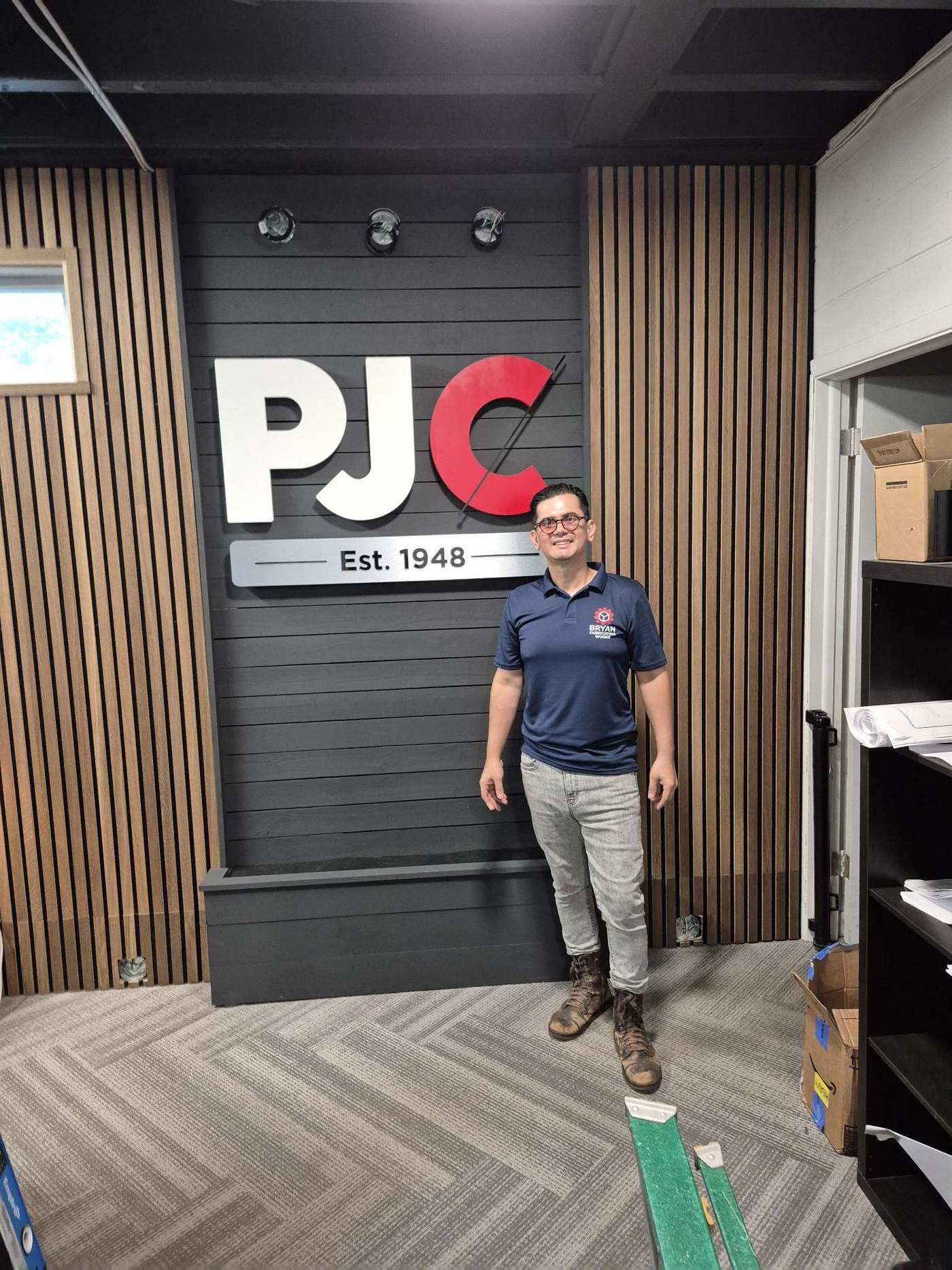
About the author
Bryan · Owner, Bryan Fabrication Works
Bryan owns and runs Bryan Fabrication Works, a Tampa sign shop that designs, cuts, finishes, and installs lobby signs, halo-lit LED signs, dimensional letters, ADA signage, and memorial boards under one roof. The guides here come from the questions customers ask him during quotes, and from the jobs in the portfolio.
More about the shop